Review Portable Air Conditioners Whynter

Whynter ARC-122DS Portable Air Conditioners - Review and opinions

Whynter ARC-122DS
7.3 Overall

Quick recommendation

Value for money 7.4/10
Ease of use 7.1/10
Durability 6.4/10
Customer reviews 8.2/10

Is it worth it?

The Whynter ARC-122DS is aimed at renters, apartment dwellers, and anyone who needs real compressor-based cooling without installing a window unit. Its strongest hook is the dual-hose design, which is a meaningful upgrade over many single-hose portables when you want better room cooling and less wasted effort. The trade-off is familiar portable-AC reality rather than marketing fantasy: you still have to live with hoses, a window panel, a fairly large floor footprint, and the possibility that drainage management matters more than you hoped.

This is a good fit for someone cooling a bedroom, office, or modest living area up to about 400 square feet who values dual-hose efficiency and can tolerate portable-AC noise. I’d buy it over a cheaper single-hose unit for hot rooms and rental use, but I’d skip it if quiet overnight operation is your top priority or if you want a low-fuss machine that never asks for drainage attention. The cooling case is strong; the ownership experience is where the compromises show up.

Cooling capacity 12,000 BTU
Recommended room size up to 400 sq ft
Noise level 47 dBA
Exhaust setup dual hose with window kit included
SACC capacity 7,000 BTU
CEER/SEER 13

Key features

Dual-hose cooling

This is a true portable air conditioner with separate intake and exhaust hoses, not a fan or swamp cooler.

That matters because dual-hose designs are better suited to sustained cooling in hot rooms, especially when compared with single-hose units that can work against themselves by pulling conditioned air out of the room. If efficient real cooling is the reason you are shopping, this is the feature that gives the ARC-122DS its clearest edge.

Window-ready package

The box includes the window kit, exhaust hose, intake hose, filters, and storage bag, so the basic installation path is already covered.

For renters and apartment use, that is a practical advantage. You are not starting from scratch, but the final result still depends on how well the panel fits your window and how carefully you seal the gaps. This is easy enough for many rooms, but not completely foolproof.

Cooling plus dehumidify plus fan

You get three operating modes, three fan speeds, and full thermostatic control, so this can work as more than a one-note summer appliance.

That flexibility helps in shoulder seasons and muggy weather, especially if the room feels sticky before it feels truly hot. The caveat is simple: the more you lean on dehumidification, the more likely drainage becomes part of the routine.

Maintenance and mobility

The washable pre-filter and activated carbon filter make basic upkeep more manageable, and the caster wheels support moving it between rooms.

That combination improves day-to-day usability, but it does not make the unit small. This is still a sizable floor appliance, so mobility is best thought of as occasional repositioning rather than effortless grab-and-go portability.

User experience

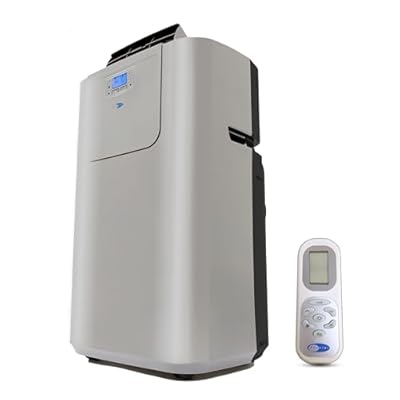
In a bedroom during a heatwave, this unit makes sense when the room is genuinely struggling and a fan is no longer enough. The 12,000 BTU class and 7,000 SACC rating put it in the lane for real spot cooling, not evaporative-cooler wishful thinking, and the dual-hose layout gives it a practical advantage in keeping conditioned air from being wasted. In a room around the stated 400-square-foot target, the appeal is straightforward: you get actual compressor cooling, thermostat control from 61°F to 89°F, and a machine that is built to vent outside rather than just move warm air around.

For daytime living room use, the ARC-122DS looks strongest when the space is enclosed rather than wide open. Airflow is rated at 194 CFM, and the body itself is substantial at 16 by 17 by 29.5 inches, so this is not a tiny corner appliance. It is better treated as a serious seasonal machine that you park near a window and let work for hours at a time. Power draw tops out at 1200 W and 10.5 A on a standard 115 V outlet, which keeps it in normal U.S. household territory, but you will notice that it is a real appliance, not a background gadget.

In a rental apartment or home office, the setup is both the reason to buy it and the reason to hesitate. You get the included window kit, two hoses, washable pre-filter, activated carbon filter, and caster wheels, so the package is clearly built for non-permanent installation and room-to-room practicality. The catch is that portable AC success depends heavily on how well you seal the window panel and route the hoses. A flimsy panel or a sloppy fit can undercut cooling and let noise or warm air creep back in, so this rewards a careful install more than a rushed one.

At night, the story is mixed in a way that matters. The quoted 47 dBA figure at low speed is encouraging, and some owners clearly find it tolerable enough for sleep or phone calls, but this is still a compressor portable AC with three fan speeds and a noticeable mechanical presence. If you want white-noise cooling in a warm bedroom, it can fit. If you need near-silence for a nursery or ultra-light sleep, this is the wrong category and the wrong model.

The biggest ownership tension is water. The built-in dehumidifier is rated at 82 pints per day, which sounds excellent on paper, but in practice that means moisture management can become part of daily use in some climates. Some households report smooth self-evaporation, while others run into frequent shutoffs or outright leakage. That makes this a stronger buy for someone who can accommodate occasional draining and a weaker one for anyone who wants a set-it-and-forget-it portable AC in humid conditions.

Pros

  • Dual-hose design is a real advantage over many single-hose portable ACs
  • Strong cooling case for bedrooms, offices, and enclosed rooms up to 400 sq ft
  • Includes window kit, washable filter, carbon filter, and casters for practical home use
  • 47 dBA low-speed rating gives it at least a credible case for bedroom use.

Cons

  • Noise is still a real portable-AC compromise and can be intrusive for very light sleepers
  • Drainage and leakage complaints are frequent enough to matter in humid or long-run use
  • Window panel quality and sealing may need extra DIY effort for the best results
  • Large body takes noticeable floor space near the window.

Community

User reviews

Owner feedback lands in a believable middle ground for portable ACs: cooling performance is the main reason people keep it, while noise, drainage, and setup quality decide whether they love it or merely tolerate it. The practical lesson is that this model rewards a careful install and realistic expectations more than it rewards impulse buyers looking for silent, maintenance-free cooling.

That

I set it up myself in about half an hour, sealed the window panel a bit better, and the cooling was immediate enough to turn a brutally hot apartment into a livable space fast. Mine stayed leak-free for a month, but.

LAguilera

In Palm Springs heat it cooled an average room well and the noise faded into the background for me, but the water buildup became a real hassle and forced frequent draining.

Watermouse

I use it in a bedroom office and it cools quickly enough to make the room workable, while the sound stays acceptable for calls. The weak point is the flimsy window bracket, which really benefits from DIY sealing.

StinkerBell

Works great for me, cools quickly, and I found it very quiet.

Comparison

Against the CARLOX JHS-A016K-07KR-D3, the Whynter takes the stronger enthusiast route. Both are in the same broad portable-AC class, and CARLOX is rated for up to 450 square feet with a 46 dB claim, but the Whynter counters with a confirmed dual-hose layout and a clearly stated 7,000 SACC figure. Choose the Whynter if you care more about the efficiency advantage of dual hoses and want a more confidence-inspiring cooling architecture. Choose the CARLOX if a slightly larger claimed room size and a simpler feature set matter more.

Against the Feelfunn PAC019-8K, the Whynter is the more serious cooling pick for hotter rooms. Feelfunn is an 8,000 BTU ASHRAE model for up to 350 square feet with 48 dB noise, so it suits smaller rooms and lighter-duty use. The ARC-122DS gives you more cooling headroom, a dual-hose setup, and a more convincing route for sustained summer use in a bedroom, office, or compact living room. The trade-off is that the Whynter is the bulkier, more demanding machine, so the Feelfunn route makes more sense when space and simplicity outrank maximum cooling strength.

Conclusion and verdict

The Whynter ARC-122DS earns its place by getting the fundamentals right where many portable units fall short. It is a real dual-hose portable AC with meaningful cooling capacity, a sensible room target, included installation hardware, and enough control flexibility to cover cooling, fan duty, and dehumidifying in one machine. For renters and anyone blocked from using a window unit, that is a strong package.

I’d choose it for a bedroom, office, or enclosed living space where cooling performance matters more than elegance. I’d pass if your top concern is whisper-quiet sleep or zero-hassle drainage. If the current offer is competitive, this is one of the more convincing portable-AC routes in its class, as long as you go in expecting portable-AC compromises rather than central-air polish.

FAQ

Is this a true portable air conditioner or just an evaporative cooler?

It is a true compressor-based portable air conditioner with exhaust hoses and a window kit.

Does it need venting and is it suitable for a bedroom?

Yes, it must vent through the included window kit, and it can work in a bedroom if you accept normal portable-AC noise rather than expecting near-silent operation.

Michael R. Lawson

About the author

Michael R. Lawson

I've written about portable air conditioners for 2 years, tested several models myself, and share honest opinions to help people make smarter buying decisions.