
This is the broad real-world band many portable units fall into, which explains why bedroom comfort is often harder than marketing suggests.
Quiet Portable Air Conditioner for Bedroom Sleep: How to Judge Noise and dB Claims
If you are a light sleeper, treat 46 to 50 dBA as borderline and anything above 52 dBA at bed distance as a warning sign unless the room can be pre-cooled first.
For sleep, the safer target is a unit that can stay around 42 to 45 dBA in low or sleep mode under clearly stated conditions. Many portable ACs land closer to 50 to 65 dB in real use, so distance, startup behavior, and sound character matter as much as the number itself.
You want a portable air conditioner that will not wreck your sleep, but product pages often show optimistic noise claims without saying the distance, mode, or whether the sound is a steady fan hum or a more annoying compressor whine.
Key bedroom noise benchmarks for portable air conditioners
This is a genuinely strong range for a portable AC in low or sleep mode, but only when the mode and distance are clearly stated.
This band can work if the sound stays steady and low-pitched, yet it is more likely to disturb sensitive sleepers in a small bedroom.
Expect this range more often in high mode or warmer conditions, which is why pre-cooling matters before bedtime.
Once noise moves above this level near the pillow position, sleep disruption risk rises even if cooling is still effective.
A dB figure without distance is weak because 3 ft and 6 ft are not interchangeable in a real bedroom with wall reflections.
The practical takeaway is simple: do not read one dB number as the whole story. A portable AC that claims 42 dBA in a low mode may still sound much more intrusive when the compressor ramps up, when the unit sits closer than 6 ft from the bed, or when the room forces higher fan speed. The strongest buyer evidence combines low-mode noise, high-mode noise, startup behavior, and distance. That matters because a unit that stays in the 42 to 45 dBA band in sleep mode is far more bedroom-friendly than one that only reaches that figure under narrow conditions, then spends warm nights in the 51 to 56 dBA band.
Bedroom portable AC decision rules by sleeper type and room scenario
| Light sleeper in a small bedroom | Low sleep-mode noise and low startup intrusiveness | Prioritize a clearly stated low or sleep measurement at about 6 ft, then check for any mention of startup peaks or high-pitched whine. A unit in the 42 to 45 dBA range is a much safer target than one sitting in the 46 to 50 dBA band. | Published low-mode noise with distance, plus evidence that compressor behavior is not abrupt. |
| Hot bedroom that stays warm overnight | Balanced cooling realism and stable nighttime sound | Do not chase the lowest dB number alone. If the room runs hot, a unit that can cool effectively without living in high mode will often sleep better than a weaker unit that looks quiet on paper. SACC is more useful than inflated legacy BTU claims for judging realistic cooling. | Credible cooling capacity for the room, useful sleep mode, and no sign that the unit must stay in loud high mode all night. |
| Large bedroom or open sleeping area | Enough real cooling without excessive noise escalation | Choose by realistic cooling first, then control the noise penalty. The framework treats real cooling or SACC as 15% of the decision because underpowered units can end up noisier in practice by running harder for longer. | Cooling capacity that matches the room, with acceptable mid or high noise rather than a weak low-mode claim alone. |
| Buyer sensitive to tonal whine or clicks | Sound character over headline dB | Reject units that only advertise a low dB figure if there is no clue about tone. The brief notes that compressor whine, chatter, and start clicks can be more disturbing than a steadier fan sound at a similar dB level. | Some evidence about tonal behavior, not just a manufacturer quiet claim. |
| Budget buyer trying to avoid a bad bedroom pick | Avoid misleading noise marketing | Use a stricter proof rule before chasing a cheaper model. If the noise figure is manufacturer-only and does not say distance or mode, treat it as incomplete. Bedroom suitability is too easy to overpromise with as low as language. | A clear mode label, a distance, and enough installation detail to know the hose and window setup will not add whistle or vibration. |
| Bed placed close to the unit | Distance and placement control | Assume the same unit will feel louder at the pillow than in a showroom-style claim. The critical metrics section treats bed-to-unit distance under 3 ft as a poor setup, while 6 ft or more is the stronger target for perceived comfort. | A room layout that keeps the unit away from the bed and out of reflective corners where noise can bounce back. |
Start with bed-distance noise, not nameplate cooling. For bedroom use, LAeq at 6 ft in sleep mode carries the heaviest weight in the decision framework at 25%, and startup peaks plus tonal quality add another 30%, so a model with only a vague low dB claim is a weak bet for light sleepers even if its cooling headline looks strong.
Published bedroom noise versus cooling realism for quiet portable AC candidates
Cooling realism for bedroom use
4242.54343.5446066.272.578.885
Published or externally noted low-noise anchorMidea Duo Smart Inverter
Whynter ARC-1230WN
LG LP1022FVSM
Frigidaire Gallery GHPC142AA1
Dreo 740S
DeLonghi Pinguino PAC EX100 or GentleJet
This chart should be read as a confidence-and-fit visual, not as a ranking. The x-axis uses the reported low-noise anchor because that is the number shoppers usually see first, but the y-axis reflects whether the cooling story looks believable for actual bedroom use. That matters because a portable AC can post a very low quiet-mode number and still disappoint if the room is warm enough to force louder operation. The clearest examples are models with more than one noise point or with an external reading at a stated distance, such as the Midea Duo example at 6 ft. By contrast, a single minimum dB claim without distance, startup behavior, or mode detail belongs lower on buyer confidence even if the number looks impressive.
Bedroom sleep suitability by portable AC noise band
Light sleeperAverage sleeperHot bedroom needing more coolingBedroom with unit 6 ft or more from bedBedroom with unit under 3 ft from bed
Under 40 dBAbest fitbest fitrare for this usebest fitgood fit
40 to 45 dBAgood fitgood fitpossible if low mode holdsgood fitborderline
46 to 50 dBAborderlineacceptableacceptableacceptablepoor fit
51 to 56 dBApoor fitborderlinecommon trade-offborderlinepoor fit
57 to 65 dBApoor fitpoor fitlast resortpoor fitworst fit
The main lesson is that bedroom suitability falls off quickly once noise rises above the mid-40s dBA, especially for sensitive sleepers or beds placed close to the unit. The brief treats 40 to 45 dBA as very good for a portable AC, while 46 to 50 dBA is only acceptable if the sound stays steady and the room does not force long stretches of louder operation. The 51 to 56 dBA band is common under heavier load, which is why pre-cooling before bedtime can matter more than chasing a single quiet-mode claim. This heatmap also shows why distance matters: even a decent noise band becomes less bedroom-friendly when the unit is under 3 ft from the bed, because reflections and direct sound both increase perceived intrusiveness.
Bedroom portable AC buyer checklist for noise and sleep comfort
- Check whether the dB figure names a mode and a distance.A low number without sleep or low mode and without 3 ft or 6 ft context is too weak for a bedroom decision.
- Look for more than one noise point, not just a minimum claim.A unit that only advertises as low as noise may still spend warm nights much louder in real cooling use.
- Verify whether startup peaks are discussed.Lmax matters because sudden compressor jumps can wake light sleepers even when average noise looks acceptable.
- Check if the room can keep the unit at least 6 ft from the bed.The critical metrics treat 6 ft or more as the stronger setup, while under 3 ft is a poor bedroom layout.
- Inspect the hose route and window kit details.Bent hoses, poor sealing, and whistle-prone installation can add noise and make the unit work harder.
- Prefer realistic cooling metrics over oversized marketing alone.SACC is more useful than inflated legacy BTU claims because an underpowered unit may run louder for longer overnight.
- Look for clues about sound character.A steady fan hum is often easier to sleep through than sharp clicks, rattles, or high-pitched inverter whine at a similar dB.
- Check filter access and maintenance basics.Restricted airflow can raise fan noise, so easy filter cleaning matters for keeping nighttime sound under control.
Common bedroom portable AC noise mistakes and how to avoid them
Trusting a low dB claim that does not state distance or mode
High
Treat the claim as incomplete until the mode and measurement distance are clear.
This is one of the easiest ways to overestimate bedroom suitability because 42 dBA at an unknown distance is not comparable to a 6 ft sleep-mode reading.
Placing the unit too close to the bed
High
Rework placement to target about 6 ft from the bed when possible.
The critical metrics mark under 3 ft as a poor setup, so even a decent 46 to 50 dBA unit can feel much more intrusive at pillow distance.
Ignoring startup spikes and only comparing average noise
High
Look for any mention of Lmax, startup behavior, or abrupt cycling before buying.
A compressor jump above the steady background can trigger wake-ups even if the average dBA looks acceptable.
Letting the hose bend sharply or whistle
Medium
Keep the hose as straight and short as the installation allows.
Restricted airflow can add hose noise and force less efficient operation, which may keep the unit louder for longer.
Assuming sleep mode always means sleep-friendly
Medium
Verify what the sleep mode actually changes before treating it as a bedroom guarantee.
Some sleep modes lower fan speed, but others mainly change display or temperature behavior, so the room may still hear the compressor clearly.
Oversizing by BTU headline alone
Medium
Use realistic room fit and cooling metrics rather than chasing the largest number.
More capacity can cool faster, but it can also add noise and cycling if the room does not need it. The brief recommends choosing by realistic cooling fit, not bigger-is-better logic.
Relying on a phone app as the main proof
Medium
Use app readings only as a rough check, not as the deciding proof.
The brief allows phone apps only as rough orientation, so they are weak evidence for comparing bedroom suitability across models.
Trying to muffle the unit with a box or blanket
High
Use safe fixes such as better sealing, leveling, filter cleaning, and vibration control instead.
Blocking airflow can hurt cooling and create safety problems, making this a bad fix even if the goal is lower noise.
Portable AC bedroom advice by sleeper type and room situation
The right trade-off depends on whether you are fighting heat, reacting to tonal noise, or trying to improve a unit you already own.
Light sleepers
Basic
Start with the strictest rule: a portable AC is only a strong bedroom fit if low or sleep mode stays near the 42 to 45 dBA band under clearly stated conditions. Once noise moves into 46 to 50 dBA, comfort becomes much less predictable for sensitive sleepers.
Prioritize steady sound over flashy claims. A smoother low fan sound is often easier to live with than a model that advertises a low minimum dB but adds clicks, rattles, or high-pitched compressor tones.
Hot bedrooms
Basic
Cooling realism matters as much as quiet mode. If the room stays hot after midnight, a unit that cannot keep up may spend hours in louder operation, which can erase the benefit of a low published sleep-mode number.
This is where realistic cooling metrics help. The brief favors SACC-aware buying because an underpowered portable AC may sound louder in practice simply by working harder for longer.
Sensitive to whine or clicks
Advanced
Treat tonal noise as a separate filter. The brief notes that inverter designs can reduce harsh on and off cycling, but some can still produce an intrusive high-pitched tone that feels worse than the dB number suggests.
If you know sharp sounds bother you, do not buy from a bare dB claim alone. Look for any evidence about compressor tone, chatter, cabinet rattle, or startup behavior before narrowing your shortlist.
Trying to quiet an existing unit
Basic
Fix the setup before replacing the machine. Straightening the hose, sealing the window better, cleaning the filter, and leveling the cabinet can reduce both airflow noise and vibration without blocking ventilation.
For sleep, pre-cooling is often the biggest comfort upgrade. Bringing the room down earlier can let you switch to low or sleep mode overnight instead of forcing the unit to stay in a louder high-load pattern.
Ideal bedroom noise test benchmark for portable air conditioners
What a trustworthy bedroom noise test should include
Bedroom noise benchmarkA meaningful bedroom noise benchmark should measure the same unit in the same room at 3 ft and 6 ft, with the same window seal, hose setup, and operating mode. The key outputs are background noise, LAeq for each mode, and Lmax for startup events after the unit has stabilized.
1
Room baseline
Setup: Measure the room with the AC off for 60 seconds before any run.
Measured variable: Background dBA
Evaluation rule: Baseline should be captured first so the AC reading has context and weak comparisons can be avoided.
2
Near-field low-mode check
Setup: Measure at 3 ft from the front of the unit after about 10 minutes of stabilization in fan-only low and then cool low or sleep.
Measured variable: LAeq and subjective sound character
Evaluation rule: This phase helps separate fan noise from compressor noise and reveals whether the unit sounds smooth or intrusive up close.
3
Bed-distance sleep check
Setup: Repeat at 6 ft or at the pillow position using the same mode and room conditions.
Measured variable: LAeq at bed distance
Evaluation rule: This is the most useful bedroom comparison because the decision framework gives sleep-mode noise at 6 ft the highest weight at 25%.
4
High-load reality check
Setup: Run cool high after stabilization under the same installation conditions.
Measured variable: LAeq in high mode
Evaluation rule: A unit that looks quiet only in low mode but jumps into the 51 to 56 dBA band or higher under real load may still be a weak bedroom fit.
5
Startup spike capture
Setup: Track the compressor start event during cooling operation.
Measured variable: Lmax
Evaluation rule: Sharp peaks are important because wake-ups are often caused by sudden spikes, not just average noise.
6
Hose diagnostic
Setup: Compare a straight hose route with a more restricted route without changing anything else.
Measured variable: Change in noise character or level
Evaluation rule: This helps identify whistle or turbulence problems caused by installation rather than by the core unit itself.
How to make a portable air conditioner feel quieter at night
Start with the highest-impact fixes that do not compromise airflow. A firm, level surface can reduce rattles, a thin anti-vibration mat can help with floor transmission, and a straighter hose can cut whistle and turbulence. These changes matter because the noise diagnosis in the brief separates source noise from path noise and vibration.
Pre-cooling is often the smartest overnight strategy. If the room reaches a comfortable temperature before bedtime, the unit is less likely to spend long stretches in louder high-load operation. That matters because the brief places typical higher-load portable AC noise in the 51 to 56 dBA band, which is much less sleep-friendly than the 40 to 45 dBA range.
Keep expectations realistic if you are highly noise-sensitive. The sleep context makes clear that the main issue is comfort and sleep disruption rather than hearing damage, and many people will still find 50 to 60 dB intrusive at night even when the unit is working normally. In that case, the problem may be product type limits rather than a bad individual unit.
Do not try to solve bedroom noise by boxing in the machine or covering vents. The safer path is better placement, better sealing, cleaner filters, and lower overnight demand. If those steps still leave the room too noisy, the honest conclusion may be that a portable AC is the wrong fit for that sleeper profile.
The best nighttime improvement usually comes from setup and usage, not from chasing one dramatic quiet claim. If your unit can pre-cool the room, sit farther from the bed, and avoid hose restriction or cabinet vibration, it will often feel more sleep-friendly even when its published dB figure is not class-leading.
Ranking: quietest portable ACs for the bedroom
#1Best overall quiet
LG LP1022FVSM

Dual-inverter compressor holds a steady low hum around 42-45 dB in sleep mode, so it avoids the harsh on/off cycling that wakes light sleepers while still cooling a medium-to-large bedroom.
Cooling: 10,000 BTU SACC (14k ASHRAE)
Noise: ~42.5 dB sleep
Compressor: Dual inverter
Hose: Single
Pros
- Quiet, constant tone instead of compressor cycling
- Real inverter efficiency for lower running cost
- WiFi app with a usable sleep mode
Cons
- Single-hose pulls some warm air back in
- Premium price vs basic units
#2Best quiet dual-hose
Whynter ARC-1230WN

Dual-hose airflow cools faster and more efficiently, which keeps it off the noisier high setting for longer once the room is at temperature (~42.5 dB on low).
Cooling: 12,000 BTU
Noise: ~42.5 dB low
Type: Dual-hose
Class: Large rooms
Pros
- Efficient dual-hose cooling
- Stable low-setting noise
- Strong capacity for hot rooms
Cons
- Two hoses are bulkier to seal
- Watch for compressor tone in silent rooms
#3Best for light sleepers
Dreo 740S
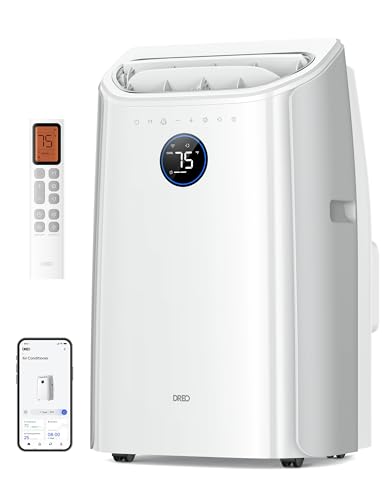
Inverter dual-hose unit rated around 40-42 dB with a soft-ramping compressor and a genuine sleep mode that lowers the fan rather than only dimming the display.
Cooling: 14k BTU ASHRAE (10k DOE)
Noise: ~40-42 dB
Compressor: Inverter
Hose: Dual
Pros
- Soft compressor ramp, no startup jolt
- Genuine fan-lowering sleep mode
- Drainage-free, app/voice control
Cons
- Smaller DOE capacity than 14k-class
- Best for small-to-medium rooms
#4Best for large bedrooms
Frigidaire FHPC142AA1

14k-class cooling for bigger rooms while holding a moderate ~49 dB; the extra capacity reaches setpoint and drops to a quieter mode sooner in a large space.
Cooling: 14,000 BTU
Noise: ~49 dB
Connectivity: WiFi
Class: Large rooms
Pros
- Plenty of capacity for big bedrooms
- Reaches setpoint fast, then eases off
- WiFi scheduling
Cons
- Louder floor than the inverter picks
- Not ideal for very noise-sensitive users
#5Best budget quiet
DOMANKI DAC-10CPD-A1

Claims a 36 dB sleep level and undercuts the premium inverters on price, a reasonable entry point for a small bedroom on a tight budget.
Cooling: 10,000 BTU
Noise: 36 dB claim (sleep)
Hose: Single
Class: Small rooms
Pros
- Low advertised sleep dB
- Aggressive price
- Compact for small bedrooms
Cons
- Single-hose efficiency
- Verify the 36 dB claim against real measurement
#6Quiet compact pick
SNOCOD OL-A016TA05N3/F

A low ~36 dB sleep claim in a compact body suits a small bedroom or home office where the unit sits close to the bed.
Noise: 36 dB claim (sleep)
Peak: up to ~60 dB high
Shape: Compact
Class: Small rooms
Pros
- Quiet sleep-mode claim
- Compact footprint near the bed
- Good for small spaces
Cons
- Climbs toward 60 dB at full load
- Size to the room and pre-cool
Editorial order weighs a low sleep/low dB level, a soft-start or inverter compressor and a usable sleep mode over the lowest advertised number alone. Manufacturer dB figures are "as low as" claims without a stated distance, so confirm against the 3 ft / 6 ft measurement box in each linked review.
Quiet portable AC bedroom sleep FAQ
What counts as quiet for a portable air conditioner in a bedroom?
For a portable AC, about 40 to 45 dBA in low or sleep mode is a strong bedroom result when the distance is clearly stated. Around 46 to 50 dBA can still work for many people, but it becomes borderline for light sleepers. Once noise rises above roughly 52 dBA near bed distance, nighttime comfort usually gets harder.
Is it safe to sleep with a portable air conditioner running?
Usually yes, if the unit is installed correctly, ventilated properly, and maintained. The brief frames the main concern as sleep comfort, dryness, drafts, and wake-ups from compressor cycling, not normal hearing damage. For better rest, pre-cool the room and use low or sleep mode instead of forcing loud high-load operation all night.
Does inverter always mean quieter at night?
No, but it is often a better starting point. Inverter designs can reduce harsh on and off compressor cycling, which helps overnight comfort, yet the brief also notes that some inverter units can produce high-pitched tones. That means inverter is a useful clue, not a guarantee of bedroom-friendly sound.
Can I trust a product page that says as low as 42 dB?
Only with caution. A number like 42 dB is much more useful when it also names the mode, the distance, and whether it reflects a realistic cooling condition. Without that context, the figure may describe a narrow best case rather than the sound you will hear during a warm night in a bedroom.
Are phone dB apps good enough to compare portable AC noise?
They are fine for rough orientation, but not strong enough to settle close buying decisions. The brief recommends a proper sound meter for serious comparison and warns that phone apps should not be treated as the main proof when you are trying to judge whether a portable AC is truly bedroom-friendly.
Sources and methodology for this quiet portable AC bedroom guide
Sources and methodology for this quiet portable AC bedroom guide
This guide is based on an editorial source brief reviewed on June 5, 2026, plus site context and related product coverage. It separates manufacturer noise claims from external review measurements and from ideal testing guidance. We do not present hands-on noise measurements here unless a linked review explicitly documents them.
- Editorial brief covering bedroom noise, sleep comfort, dB interpretation, and portable AC measurement standards
- Manufacturer and retail noise claims cited in the brief for brands such as Midea, Whynter, Frigidaire, LG, Dreo, and De'Longhi
- External review and lab references named in the brief, including Business Insider, TechGearLab, and RTINGS
- Official and technical context referenced in the brief, including Google review-quality guidance, DOE efficiency terms such as SACC and CEER, WHO night-noise context, NIOSH occupational noise context, IEC 61672, and ASHRAE acoustic principles
- Portable AC Reviews category context, related reviews, and internal buyer guidance for U.S. shoppers
Evidence limits
- This page does not claim original in-room dB testing for every model discussed.
- Published noise figures may use different distances, modes, and room conditions, so they are not fully apples to apples.
- Some cited noise numbers are manufacturer best-case claims such as as low as values rather than full-load bedroom results.
- The guide is informational and should not be read as a live pricing, stock, or availability source.
- Sleep comfort depends on sound character, cycling behavior, placement, and room acoustics, not dB alone.